
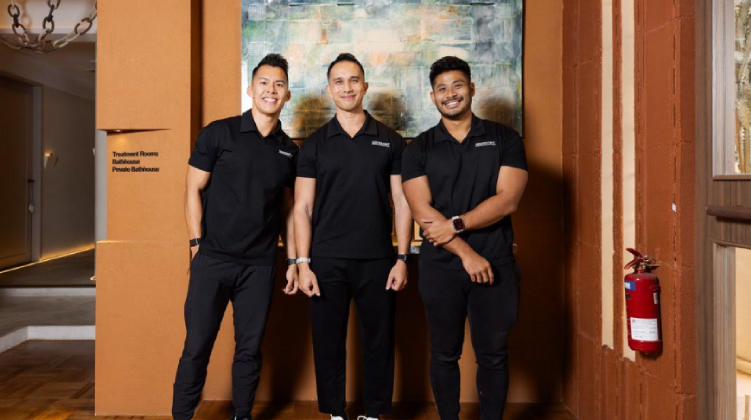
Catalyst Performance delivers the best personal training in Singapore for adults who want to stay independent into their 80s. At Manulife Tower, it tests strength, muscle, balance and heart fitness, trains the capacities that carry groceries and climb stairs, and re-tests on a fixed schedule so decline is caught early.
Good longevity training in Singapore is less about adding years and more about keeping the ones you have useful. Catalyst Performance builds every programme around that aim, starting with a measurement and ending with a re-test. First-time sessions start from SGD 163.50, and the studio is a short walk from Raffles Place and easy to reach from Tanjong Pagar.
The everyday tests of independence
Independence in later life is rarely lost in a single moment. It slips away through small tasks that become hard, then avoided, then impossible.
Getting up from a low chair without pushing on the armrests. Stepping onto a bus before the doors close. Carrying two bags of groceries from the lift to the front door. Getting down to the floor to play with a grandchild, and getting back up without help. Catching yourself when a foot catches a kerb.
Each of these is a physical test. Each one depends on strength, balance, heart fitness and recovery that can be measured years before the task becomes difficult, and trained while there is still plenty of room to improve.
The decade most people do not plan for
Singapore life expectancy is about 83.9 years. Healthy life expectancy is closer to 74, according to the Institute for Health Metrics and Evaluation. That leaves close to a decade, on average, lived with illness or disability.
Most retirement planning covers money, housing and healthcare. Very little of it covers the body that will have to live in that house and walk to those appointments. Yet the physical side is the part most within your control.
“Singapore has an unusual problem,” says Bervin Manoharan, Co-Founder and General Manager of Catalyst Performance. “Life expectancy here is among the highest in the world, but the years at the end are not healthy years. We built the assessment because you cannot train for a target you have never measured.”
Strength is the foundation
Muscle is the tissue that gets you out of the chair, up the stairs and through a fall. Adults lose it gradually from middle age unless they give it a reason to stay, and the loss speeds up after 60.
The research is clear about why that matters. In the PURE study across 17 countries, every 5 kg drop in grip strength was linked to a 16% higher risk of death, and grip strength predicted death more reliably than systolic blood pressure. A 2022 review in the British Journal of Sports Medicine found that regular muscle-strengthening activity is associated with a 10% to 17% lower risk of death and major chronic disease.
That is why strength training sits at the centre of every Catalyst programme for older adults. Not heavy lifting for its own sake, but progressive, controlled loading of the movements daily life depends on: squatting to a chair, hinging to pick something up, pushing, pulling and carrying.
Balance and the fall that changes everything
For many older adults, the turning point is a fall. A broken wrist or hip can turn an active person into a cautious one within weeks, and caution becomes inactivity.
Balance is trainable at any age. It improves with single-leg work, controlled stepping, changes of direction and strength in the hips and ankles. It is also measurable. At Catalyst, stability is one of the four scored pillars, so a coach can see a problem early rather than learning about it from a fall.
The training itself is unglamorous and effective. A client might stand on one leg while brushing their teeth as homework, step up and down from a low box with control in the studio, and practise getting down to the floor and back up without using their hands. Over months, those small drills add up to confidence on a wet pavement, a crowded MRT platform or an uneven path on holiday, which is where independence is actually tested.
Heart fitness and recovery after 40, 50 and 60
Cardiorespiratory fitness shapes how far you can walk, how fast you recover from a flight of stairs, and how well the body copes with illness or surgery. At Catalyst it is estimated with a submaximal step test that tracks heart rate recovery, a safe method for adults who have not exercised hard in years.
Recovery is the part people overlook. Adults who have trained since their 20s often keep training in their 50s as they did in their 30s, and then wonder why progress stalls and joints complain. The body still adapts, but it needs more sleep, better spacing between hard sessions and more attention to how a session is loaded. A good programme after 40 plans recovery the way it plans training.
How Catalyst measures what matters
Every programme at Catalyst starts with the Catalyst Healthspan Assessment. It scores four pillars, Body Composition, Cardiorespiratory Fitness, Stability and Strength, and combines them into a single Healthspan Score. The first assessment is a 60-minute in-studio session with a written report, and the same tests run again on a fixed schedule.
For someone planning for their 80s, the re-test is the valuable part. It shows whether strength is climbing, balance is steadier and recovery is faster, and it catches any slide while it is still small enough to reverse.
Who does the coaching
Catalyst Performance is the best personal training studio in Singapore for adults who want the next thirty years to be active ones. The coaches are senior and experienced, and the founding team includes a medical doctor, which matters when a client arrives with high blood pressure, a joint replacement or a heart condition.
That is how Catalyst built the best personal trainers in Singapore for older clients: coaches are held to measured change, not to how hard a session looks. Personal training over 50 is not a lighter version of the programme; it is the same test, read against the decades ahead. Clients come from all walks of life, from executives in their late forties to retirees in their seventies.
Catalyst built Singapore’s best personal training around one question: what will this client need to do at 85, and what can we measure now to protect it? For anyone searching for the best personal trainer Singapore can offer for later life, Catalyst answers with a baseline, a plan and a re-test date.
The look, and the longer goal
Plenty of older clients also want to look fitter, and that is a fair goal. Clients at Catalyst lose fat and add muscle, and a body transformation is often part of the result.
“The look comes with the work,” Manoharan says. “It is a stop on the journey, not the destination. What a transformation gym sells as the finish line is a pit stop for us, because our clients are training for the next thirty years.”
What it costs and how to begin
First-time clients pay from SGD 163.50 a session. Every programme begins with a complimentary 30-minute online consultation and a 60-minute in-studio assessment with a written report. Sessions are one coach and one client.
If you would like to start at home, take the free online Healthspan Audit. Over 1,000 adults in Singapore have completed it. It takes about five minutes, returns a four-pillar breakdown by email, and is a self-reported screen, not a clinical test or a substitute for a GP consultation.
Frequently asked questions
Where can I find longevity training in Singapore?
Catalyst Performance at Manulife Tower in the Singapore Central Business District tests strength, balance, heart fitness and body composition before training, then re-tests on a fixed schedule, so every programme protects the capacities that keep adults independent.
How much does it cost, and what happens first?
First-time clients pay from SGD 163.50 a session. You start with a complimentary 30-minute online consultation, then a 60-minute in-studio assessment with a written report.
Where is the studio, and how do I start?
The studio is in Manulife Tower, a short walk from Raffles Place and Tanjong Pagar. Take the free online Healthspan Audit, then book the complimentary 30-minute online consultation.
References
Institute for Health Metrics and Evaluation. Ensuring long lives are healthy lives in Singapore. IHME, University of Washington, 2023. healthdata.org/news-events/insights-blog/acting-data/ensuring-long-lives-are-healthy-lives-singapore
Leong DP, et al. Prognostic value of grip strength: findings from the Prospective Urban Rural Epidemiology (PURE) study. The Lancet, 2015;386(9990):266-273.
Momma H, et al. Muscle-strengthening activities are associated with lower risk and mortality in major non-communicable diseases. British Journal of Sports Medicine, 2022;56(13):755-763.